
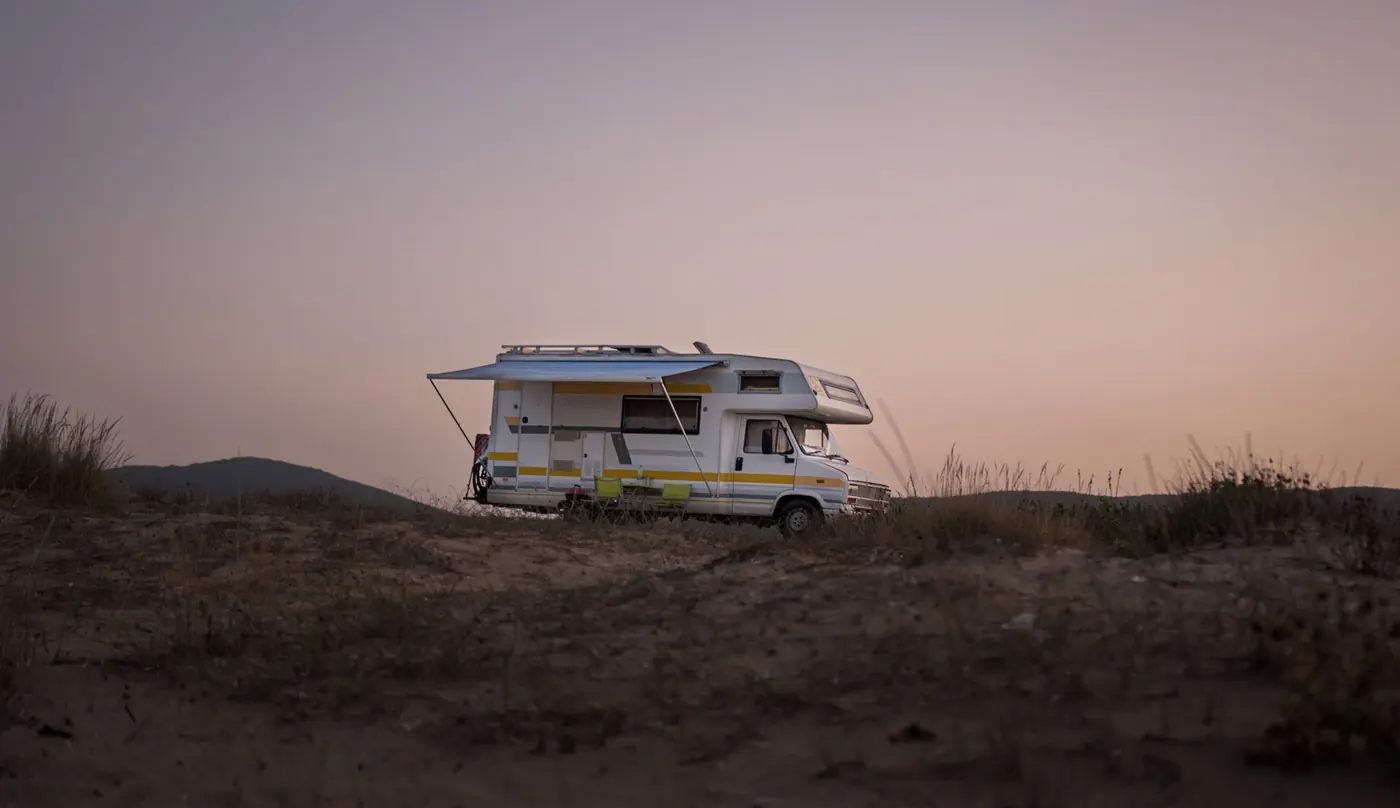
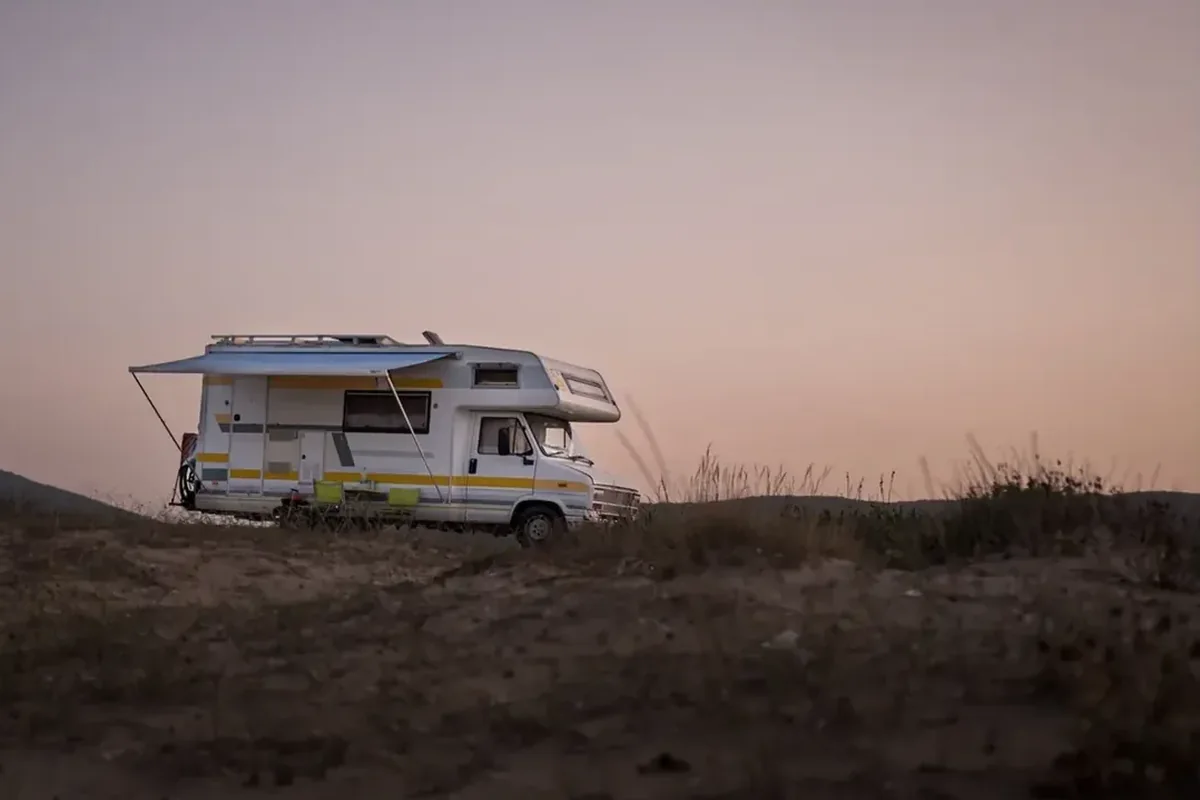
A motorhome or campervan promises the good bits of camping with the grumpy bits taken out: no pitching in the rain, no sleeping on a sagging airbed, and a kettle that is already on board. New ones cost a fortune, so plenty of families look at second-hand. That can be a clever move or an expensive lesson, and the difference usually comes down to what you check before the money changes hands.
Why Go Motorised?
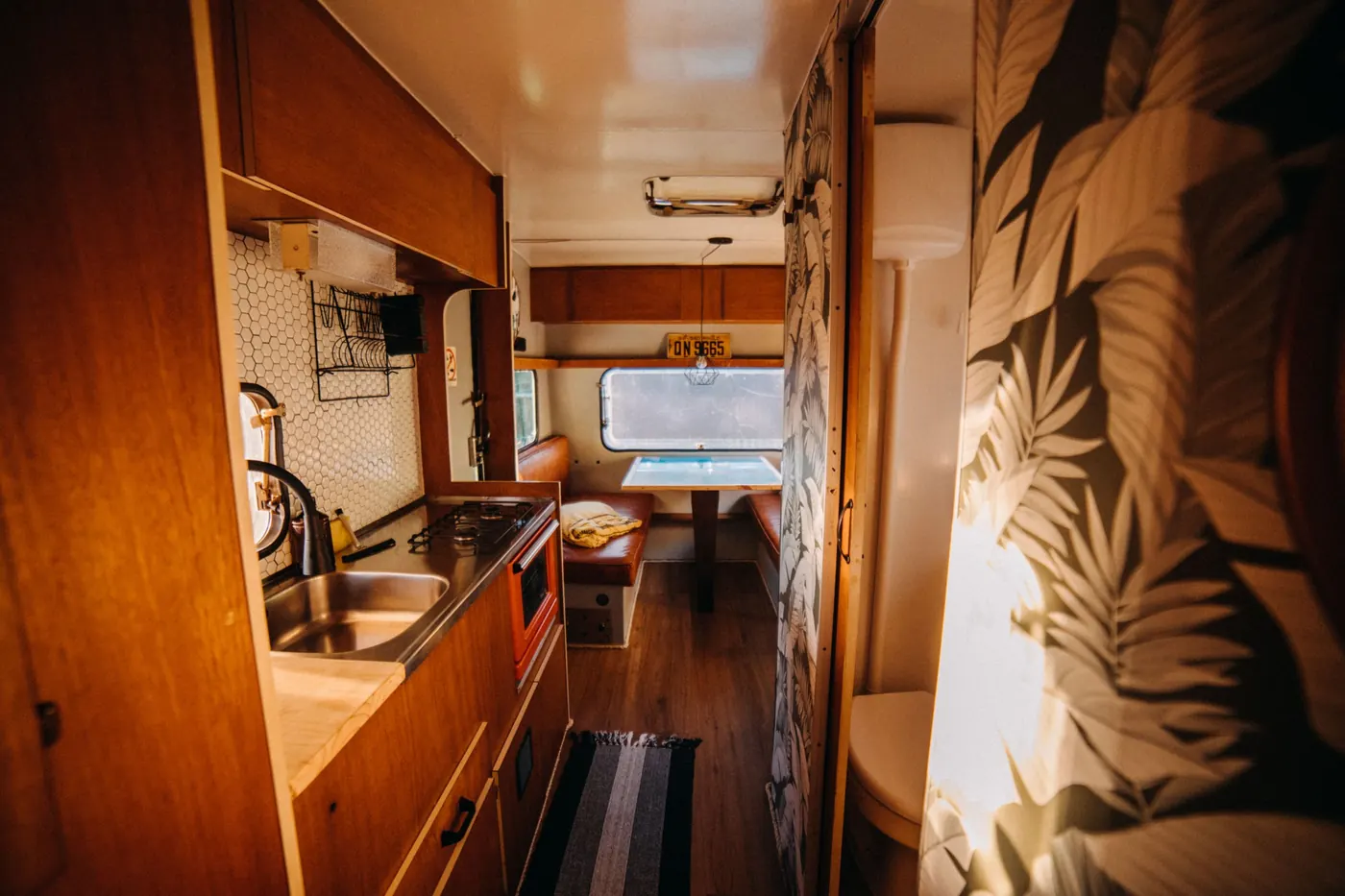
A galley, a dinette and a dry floor: everything a tent can only dream about.
Swap a tent for a motorhome or campervan and the first thing you notice is how fast a trip begins. You park, pull the handbrake and you are home. There is no tent to peg out, no groundsheet to dry and no airbed to pump up before anyone can sit down.
The kitchen is the next big win. A hob, a sink and a fridge a step from the bed mean a hot breakfast whatever the sky is doing, and a brew within minutes of a long drive. Most vans also carry a toilet, or at least somewhere private to change, which counts for a great deal with children after dark.
Because you drive rather than tow, there is no hitching up, no towbar worries and no reversing a trailer into a tight pitch. And with a roof, a heater and proper beds, your camping year stretches into spring, autumn and the odd winter weekend.
There is a catch. A motorhome is a vehicle and a home in one, so you pay to look after both. The family car that nipped to the shops is now a house you have to tidy away before you can go anywhere, which is why many families either keep a small second car or choose a campervan compact enough for everyday use.
Pick Your Shape
Motorhomes come in two broad families. A coachbuilt has a living cabin built on the back of a van chassis. A conversion starts as a panel van and is fitted out inside as a camper. Each suits a different kind of family.
Join Free To Read The Whole Guide
Free for camping families, no card needed. Printable checklists, planners and games, and up to 20% off at member campsites.
Join FreeMore camping guides
 Tent UpgradesFrom Tent To Caravan: Upgrading To A Caravan6 min read →
 Tent UpgradesTent To Self-Build Camper: How To Convert A Van Yourself16 min read →
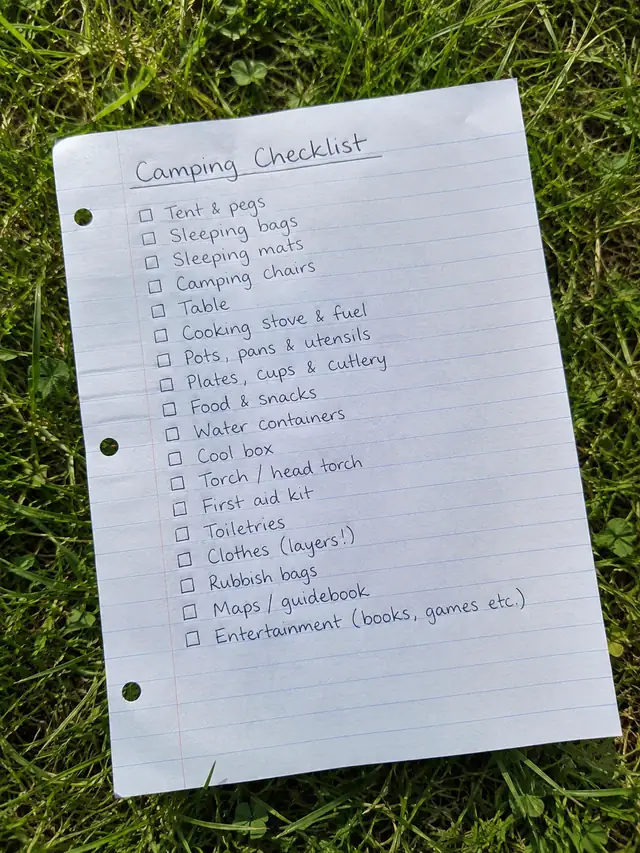 PlanningThe Ultimate UK Family Camping Checklist6 min read →
 PlanningYour First Family Camping Trip: A Step-by-Step Guide7 min read →
 PlanningFamily-Friendly Campsites in the UK: How to Choose6 min read →
 GearBest Camping Gear Under £1007 min read →
 GearPremium Camping Gear Worth Paying More For9 min read →
 FoodFamily Camping Meal Planner7 min read →
 Kids and familyCamping Activities for Kids: Games, Challenges and Rainy-Day Ideas6 min read →
 Kids and familyCamping With Babies and Toddlers6 min read →
 SafetyCamping Safety for Families: Fire, Carbon Monoxide, Water and More6 min read →
 Kids and familyCamping With Dogs: Rules, Tips and What to Pack4 min read →
 Rules and etiquetteWild Camping in the UK: What the Law Says (and Why Families Choose Campsites)5 min read →
 BudgetHow to Save Money on Family Camping5 min read →
 PlanningCamping in the UK Through the Seasons6 min read →
 Rules and etiquetteCamping Etiquette and the Countryside Code4 min read →
 PlanningCamping Trip Countdown: What to Do Before, During and After4 min read →
 Tent UpgradesFrom Tent To Camper: Buying A Second-Hand Motorhome Or Campervan14 min read →
 PlanningOff Season Camping: Why Off-Season Camping Is The Ultimate Adventure6 min read →